Monday, 27 September 2010

DJ Hero 2: Five Improvements From IGN.com


Here's the most important thing you need to know: DJ Hero 2 is still awesome. Activision and developer Freestyle Games gave us a near-perfect music game last year and they didn't mess anything up for the sequel. They have added a few new features that make scratchin' and crossfadin' even more fun than before. Here are our five favorite additions to DJ Hero 2. 


Megamixes
Just as in the first DJ Hero, each song is an original mix of two tracks that range from '70s disco to '80s hip-hop to '90s RnB to modern electro. Terrific new additions are several 
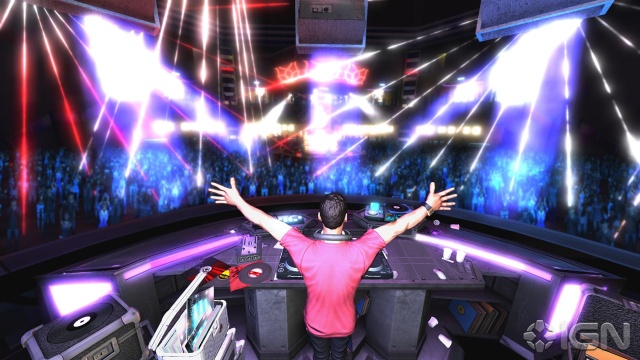

Megamixes that keep the music going seamlessly from mix to mix. In the first game each song in your set list would be self-contained and there would be a short pause in between mixes. The Megamixes blend three or more songs together, beatmatching everything so you might not even realize you've moved on to the next song. There are only six Migamixes in DJ Hero 2, but they're one of the best new additions.

New Effects
You can still trigger effects at certain points in a mix in order to boost your score but your arsenal of effects is noticeably increased. Instead of just a filter and phaser, you now can twiddle the turntable controller knob to create futuristic delays and chop effects.

Freestyling
For the most part you still crossfade and scratch by following the onscreen indicators. But now there are "freestyle" sections that let you get creative and manipulate the tracks with more freedom. Freestyle crossfading is fantastic. In each mix you basically have two records playing, right? In these sections you can move the crossfader back and forth however you like, isolating each record at will. The tech is quite impressive and it makes you feel that much more like a real DJ. I have to admit, though, that freestyle scratching leaves something to be desired. You can push and pull the turntable back and forth, but without the crossfader you're limited to baby scratches. At worst it sounds like a mess and at best you'll sound like a beginner DJ -- I'd rather just hear the pre-recorded professional scratches.


DJ Battles
The two-player head-to-head mode was kind of a miss in DJ Hero. Each player received the same note stream and simply tried to get the higher score. The sequel has a much more robust versus mode with six different games to play. Easily the best is "DJ Battle," which finds each DJ taking turns in unique mixes. It's sort of a call-and-response session with both sides trying to outdo the other. Great stuff.

Lots of Unlocks
A load of unlockables will be dropped in your lap after every set. From new songs to new venues to playable DJs to outfits to gear, you're constantly being rewarded in DJ Hero 2. Sure, you unlocked stuff in the first game, but there are noticeably more rewards here.

Bonus Improvement: Avatar Support
There are 20 playable DJs in the game, most of which have to be unlocked. But on the Xbox 360 you can also mix it up with your Avatar. Surprisingly, the Xbox Live Avatars don't look as silly in DJ Hero 2 as you might think. 


Of course, another big addition to DJ Hero 2 is the vocal part. But we're not sure yet if this is an improvement or unnecessary feature. Greg Miller, our resident Sing Star, has detailed impressions of his time on the mic here.

FIFA 11 UK Review From IGN.com

In football, sometimes it's not about the big signings or the headline additions. Take Ferguson's United; at its spine are the same core players that have helped the club dominate domestic football for the best part of a decade, and no number of star signings elsewhere in Manchester look likely to change that. EA Sports' FIFA 11 is a similar proposition; there are no grandstand new features to dazzle and no major upheavals to the existing formula, but that doesn't stop it from being the best FIFA yet and by extension perhaps the best football game there's ever been. 


If FIFA 10 realised the potential that was apparent in the series since its reboot at this generation's dawn, then FIFA 11 is more about refinement. What's really impressive about this year's effort is how far and wide that enhancements have reached. If you had any gripes about the brand of football that previous FIFAs laid out then they're likely to be answered here


FIFA 11's most profound tweak is something you won't find being boasted about on the back of the box, but its bearing on the game is beyond measure. Crosses are now more effective, whether that's a punt to the far post or a double-tapped lofted ball to the near one, and they're more often met with spectacular results. It's a continuation of the tweaked crosses that this summer's World Cup game introduced, though here it's taken further; there's more variety in how they're answered, be that an acrobatic volley, an outstretched toe or with a hammer-strong header.

It leads to greater variety in attacking options; flanks are now opened up, and scoring takes more than pinging the ball about until it finds someone with a clean line on goal. However, more options certainly don't mean more goals. Finding the back of the net's a more trying task than it's been before, thanks in no small part due to the Pro Passing that's at the heart of FIFA 11.


In truth it's something that's been a part of the series before, but in FIFA 11 it's been pushed to the fore and has a significant effect on each game's flow and pace. More emphasis is placed on well-weighted passes, with it now easier than ever to under or overpower the ball, and player positioning is equally important. There's no point trying to lay off a first touch pass to a player you've got your back to, as it'll only ever end up with your arse on the grass.

This new focus means players individual attributes are more important than ever, a fact that's highlighted by their newfound prominence in the team selection screens. EA has matched this with greater attention to detail to the star players, be that in the bespoke animations that convey the twinkle-toed runs of Ronaldo, the sturdy grace of Drogba or the flicks and shimmies that make Messi such a wonder to watch.

With this in place, the key to success in FIFA 11 is knowing your team and playing to their strengths; if you've got a right back who's in a different league to the rest of the squad then you'd be well advised to use them at every opportunity, and if there's a star player on the other side, the sensible thing to do is mark them out of the game.

In combination, all these new elements make for a much more thoughtful game of football where the best players will be thinking two to three moves in advance. It's slower but undoubtedly more authentic, and it's now more probable that some encounters could fizzle out into a midfield tussles. It might initially lack the unwavering action of other football games, but it makes a successful move all the more satisfying when it's pulled off; if you do manage to bag a late minute winner at the end of a closely fought encounter you'll probably scream louder and more ferociously than you ever have done in front of a console. 

Other improvements only help raise the level of immersion. The visual upgrade is admittedly slight – a new lighting pass and improved pitch textures bring some added life while key players' likenesses have been enhanced, though it only goes to widen the gulf between them and FIFA's swelling ranks of clay-faced trolls. The most convincing of the aesthetic upgrades is the sound; crowd noises are noticeably beefier, more atmospheric, and tailored to specific regions. Play a game in South America for example, and those samba drums in the stands will be more pronounced. Providing commentary, Andy Gray and Martin Tyler continue their largely brilliant double act – though perhaps it's one that's beginning to wear a little thin as over-familiar sound bites crop up once too often. The fans have the biggest impact, and the fevered screams that greet in-game incidents help bolster the atmosphere admirably. 

And it's the fans at home that have been given more power than before. Yes, it's possible to create custom chants but this is one new feature that falls flat; it's fiddly and overcomplicated, and there's no EQ options should you want to record a convincing one yourself. Better is the addition of custom audio – as a Chelsea fan, seeing the team coming on to Stamford Bridge to Harry J and The Allstars' 'Liquidator' was a special thrill. But best of all the editing options is the ability to alter player's attributes for the first time, which in itself is a neat way of bypassing EA's Live Season service or, in our case, being able to change more neglected lower league teams.

Other improvements off the pitch have been just as effective. Sensibly, FIFA's single player options have been consolidated into one career mode, and it's free of some of the statistical blights that marred previous FIFAs. It's possible to attack the career as a player, manager or – that rarest of breeds these days – a player manager. Seasons play out with verity (so expect Man U and Chelsea to be the teams to beat if you're playing in the Premier League), as do the transfers when the window is open.

It's all kept in check with a redesigned front end that's as slick as it is efficient, though if there's one gripe it's that it still lacks a spark and passion, with campaigns too soon becoming a lifeless trudge through the fixture list. It's an improvement on previous efforts for sure, but it still feels like there's much more ground to be covered.

But in truth it's one part of a whole that's becoming staggeringly immense, and as its years as the cream of the football crop continue, the list of features gets longer and longer. Virtual Pro returns with a few worthwhile tweaks, as does a seemingly untouched Game Face mode, and FIFA 11's legacy is an all-new feature that works surprisingly well. 

It's indicative of EA's commitment to quality across the board that what could have been a throwaway addition is in fact quite enjoyable. The right stick controls dives, and true to the real thing it's all about positioning. There's help from some on-screen markers that help track the ball and point to where the optimum position is, ensuring that getting your palms stung by a ferocious strike isn't as frustrating as it could have been.
Being a goalkeeper in FIFA 11 is faithful to the real thing in other, less satisfying ways too. Life between the sticks can be a solitary affair and that's no different here. An attempt's been made to alleviate the loneliness of the keeper by allowing the camera to pan up to the action on the pitch and orders to be barked out to team-mates, though it does little to save single player keeping from being a novelty – albeit a novelty that's been very well implemented. It's still a great way to fill out the numbers for true 11 v 11 play online (and next year we're holding out for controllable linesmen and refs, though we wouldn't be surprised if we were alone in that desire), and it makes the one-on-one stand-offs that precede a match all the more satisfying when two players are involved.
CLOSING COMMENTS
FIFA 11 doesn’t redefine the football game, nor does it bring with it bold or surprising ways to play. What it does, however, is refine an already superlative game, taking nearly every aspect and polishing it to help create a whole that’s notably superior to its predecessors. It’s excellence, not innovation, that wins out, and that’s surely no bad thing; for the next twelve months at least this is likely to be the best football experience available, and FIFA’s looking like retaining its crown in convincing fashion.


Friday, 24 September 2010

Diving Deep with Hydrophobia From IGN.com

When Hydrophobia launches next week, it will be the culmination of a long journey and the start of another. Having first been revealed at the beginning of 2007, the three subsequent years have seen it transform from a boxed game to an Xbox Live Arcade exclusive - and its release could well redefine expectations from downloadable console titles. It's not just that it's a fully fledged, third person sci-fi action adventure at a cut-down price; it's looking like a really good action adventure, and one that's as thoughtful and innovative as anything the 360 has seen this year. 

Hydrophobia is set in a chillingly plausible future. 30 years from now, and the population has risen to unmanageable levels, with water and food not plentiful enough to support the billions who live on the increasingly infertile land. Sailing the troubled waters of this world is The Queen of the World, a colossal ship that's a refuge of sorts for the rich; it's a free of the strife found across the planet, funded by mega-corporations and a haven for the bright minds that are trying to find a solution for the world's woes and a way to provide for its swollen numbers. 


But it soon transpires that The Queen of the World isn't immune to the troubles found elsewhere. As the celebrations of its tenth anniversary break out across the ship, so too does a meticulously planned terrorist attack. The culprits? The Malthusians, a group who believe the only answer to the escalating population crisis in an enforced cull, who pump their cheery 'Save the World... Kill Yourself' motto across the ship's vidscreens.

And plunged into the middle of this is Kate Wilson, a systems engineer who is to become the unwitting hero of the piece. It's a set-up that's admirable not for merely its grand arc but for the detail with which it's been realised; developer Dark Energy has been meticulous in its work, and there's a feeling that every moment of the three years it's taken Hydrophobia to launch has been well spent.

Seemingly every element of Hydrophobia's world has its own rich story; whether that's the Malthusians, who take their inspiration from Thomas Malthus' 1798 An Essay on the Principle of Population – a philosophy that's gaining credence as overcrowding becomes an ever more real threat – or The Queen of the World itself, of which detailed blueprints of a fully functioning ship were drawn up before the game had even reached production. 


It's indicative of the work that developer Dark Energy has put into Hydrophobia, the Manchester outfit occupying an office space that, by some neat coincdience, was built with the same proportions of a ship's hull. "Those blueprints weren't done for effect," creative director Peter Jones tells us, "they were done to give us a sense of place. We wanted to know, for instance, who built the ship; and as part of the back story there are five companies who come together to build The Queen of the World. We wanted to go into a lot of detail about how the world would be at that time - we followed UN population forecasts of 9 billion people on the planet, and there's a bunch of other stuff that comes to a crucial pinch point in about thirty years."


Like the best science fiction it takes a central, plausible premise and spins it out to a fantastical extreme – think Michael Crichton's Jurassic Park and how it built upon the very real issue of genetic engineering, or how P.D James' Children of Men built upon infertility to create its own epic dystopia. "I read a lot of science fiction," confesses Pete, "but science fiction has to be tangible. You're taking scientific respectability and upon that garnish a whole preposterous theory, but because it has a root of plausibility you can relate to it."

And Dark Energy's attention to detail extends beyond its science. "There are back stories to all the characters," explains Senior Creative Designer Rob Hewson, "who they were, their childhood and all that kind of stuff – it's all in there and it doesn't even appear in the game. We know it, because to make something cohesive and to make something believable you have to have that depth behind it." 

Playing through the opening chapters of Hydrophobia, it's this believability that helps heighten the experience. Unlike many other videogame backdrops, the corridors and service tunnels that make up The Queen of the World's lower levels are alive with a purpose beyond that of the game; they feel functional and lived in, as if they form part of a larger and very convincing world. It makes the prospect of exploring more of The Queen of the World all the more tantalising; next week's release is just the first part of a proposed series, exploring only a small part of the ship's imposing reach.

Hydrophobia's about more than a well realised location, though, and its play equals its vision for ambition. At its core is its water technology which is, it's no exaggeration to say, unmatched. Its flow is dynamic and bespoke, flooding areas and swilling around in a brilliantly believable manner.

What's best is how it's been worked into the game as much more than a graphical flourish – areas can be flooded at the player's will, dramatically influencing how they'll play out. Go through them dry and it's a competent, cover-based third person shooter. Go wet, though, and it's a different game all together.

Environmental kills are Hydrophobia's bread and butter, and the water plays well into them. Loose electrical cables can be knocked around, transforming placid pools into death traps, and barrels can be punted along the surface with sonic rounds emitted from the charged pistol that's Kate's regular firearm.

Different ammunition types open up more inventive ways to kill. Gel rounds attach to objects and countdown to an explosion, so it's possible to attach one to a barrel and then send it towards a group of enemies, while energy rounds can send electricity coursing through the water. All this is kept in check with a score system whereby creative kills are rewarded, and true to other Xbox Live Arcade games leaderboards promise to keep Hydrophobia fresh long after the first playthrough. 

Punctuating the action are light puzzle and investigation elements, sometimes drawing upon the water physics but more often utilising the Mavi, Kate's handy PDA. Using it switches the game into a first-person perspective in which everything's rendered in stylish wireframe, allowing the player to scan the scenery Metroid Prime style. Doors can be unlocked remotely and CCTV cameras hacked, adding another layer of depth to the game.

It's all so impressive, so vast in scope, that you have to keep reminding yourself that this isn't a full-priced, boxed product. The amount that Dark Energy has managed to squeeze into 1GB is incredible – even more so when it's revealed that 400MB of that is the sound files. This economy comes courtesy of the team's bespoke InfiniteWorlds engine, and its ability to squeeze whole games into minimal file sizes was one of the reasons the digital download path was chosen for Hydrophobia.

"We can produce this product and put it out globally at a fraction of the price [of a boxed game] – and it's still the same quality product," explains Dark Energy's Deborah Jones. Peter Jones is more bullish: "I actually think what we witnessed is the beginning of the end of the old business model of making video games. It takes time to work through, but if you look at the shockwaves that have already gone through the industry, I don't think those terms are too strong."

If the death of physical retail means more games like the Hydrophobia - thoughtful, technically impressive and best of all at a download-friendly price point - then the future's looking very bright indeed. Expect the full verdict next week. 

Need for Speed: Multiplayer Hotness From IGN.com

It's always funny to travel around the world and arrive in Tokyo, only to play a game developed outside of Japan. I happily did that, however, following EA's press conference at the Tokyo Game Show when I sat down for a multiplayer session with Criterion Games' Need for Speed: Hot Pursuit. Although I respect the Need for Speed series, I've never been an avid follower of it -- until now. This is one of the tightest, most exhilarating arcade-style racers I've gotten my hands on, and multiplayer is a total blast. 

The folks at Criterion Games, of course, are no strangers to well-polished racers. Having nurtured Burnout Paradise long after its launch, the studio seems to be putting a lot of effort into Hot Pursuit. Players will be able to experience the thrill of chasing down illegal racers or, alternatively, running from the long arm of the law while burning over the asphalt. During my multiplayer session, I was able to get behind the wheel of both sides of the chase. In doing so, Need for Speed: Hot Pursuit became one of my most anticipated games yet. 

The multiplayer suite of Need for Speed: Hot Pursuit is incredibly robust, especially when you consider the Autolog system, which seamlessly tracks your friend's accomplishments in-game and creates a hyper-intuitive system for launching into those same challenges in order to best them. But the real competition, of course, comes from playing with your friends online in one event. And that's where things get beautiful.

Need for Speed: Hot Pursuit has three different modes for online play: racing, hot pursuit and interceptors. Racing, as you might expect, is just straight competition with no bells and whistles. Hot pursuit is the mode that pits the cops against the racers, and interceptors puts you in a more involved, elaborate chase that can take up to 30 minutes to complete.

At EA's event, hot pursuit was the mode on display, so I quickly found myself amidst the cops, chasing down the racers on a dangerous forest road. The first thing I noticed when it comes to Need for Speed: Hot Pursuit (and what might be obvious to those familiar with Criterion's projects) was how brilliantly the cars controlled. There's a degree of realism to be found in the handling, but really this game is all about having fun and racing at blinding speeds. Skimming around a corner while biting at the tail of an escaping racer is a special kind of treat, one that many will greatly appreciate.

In Hot Pursuit, players will have access to some "special moves" to keep things interesting. Those on the police's side can order a road black, lay down a spike strip, call in helicopter support and trigger an EMP. All these techniques can be executed with a direction on the d-pad and they definitely spice up the already adrenaline-filled matches. 


The racers aren't without their own set of tricks, though. They can also throw down spike strips and trigger EMP blasts, but they have a jammer for dealing with pesky police helicopters and they also have a powerful turbo boost that can send them careening down a track. While playing as a racer, this was one of my favorite moments in the multiplayer experience, despite the fact that I wrecked my car at the end. As you might expect, your ride doesn't turn as well during a turbo boost, so walls are not your friends...

There's really nothing I didn't like about Need for Speed: Hot Pursuit so far, though my experiences have been limited. The game is incredibly promising and I suspect that any gamer interested in racing will get a kick out of this title, especially its multiplayer support. But we'll just have to see if the final product is as enticing as the short demos I've enjoyed thus far.

Future Xbox, PlayStation games could all be free - THQ From Computerandvideogames.com

THQ has claimed that the price of video games will drop in future - and could even go free-to-play - as publishers release less content on-disc.

According to THQ boss Brian Farrell, the future of console gaming is most likely see stripped-down titles bought at retail for $29 - $39.


Gamers will then have the option to download extra content to the tune of around $100 if they so wish.

THQ is experimenting with the hybrid model with its MX Vs ATV off-road racing title, due for release next year. 

However, Farrell told investors this week that a free-to-play model - where gamers only pay for in-game items and extra content after a gratis initial sale - was also a possibility.

"You might know we are the industry leader in off-road racing in gaming with our MXVs ATV brand," Farrell told the Goldman Sachs Communacopia Conference in New York. "In the past, we've seen that we bring the game out at $59.99 and it does reasonably well - around one million, or one million-and-a-half units. 

"When we lower the price to a mass market price the thing really jumps... So what we're doing this time is we're coming out initially with a smaller game at a lower price point - the $29 to $39 range. 

"We're then doing a download model for different modes, different tracks, different vehicles. It's what we call a hybrid - it's a bit of the microtransaction and DLC model.

"It does a couple of things: I'm a big believer in monetising under the curve, so we capture that $29 to $39 user no matter what, and a person that wants to spend $100 on the product can do so as well.

He added: "I think that's the future of gaming - whether it's this model or a take on the free-to-play model. It's where our industry is going and this is a very, very interesting experiment with one of our key brands."

We play Dead Rising 2... From Strategyinformer.com

I guess it's safe to assume that if a terrible virus did spread throughout the real world, infecting people and turning them into zombies, we'd have a fairly good idea of how to deal with them by now, thanks to the plethora of movies and games that teach us various ways to dispatch the shamblers. As if Dead Rising hadn't taught us well enough the first time around, the mall action is back for a second round in Dead Rising 2, and it's all looking mighty familiar. 


If you loved the first game, you'll most likely get a kick out of number two. Not a lot has changed in terms of gameplay and concept, although the controls feel much smoother this time around, and the added co-op mode is plenty of fun. There are some horrible difficulty spikes involved, and you'll need to spend a ridiculous amount of time with the game to see results, but otherwise this is the successor that Dead Rising fans have been longing for. 


New guy Chuck replaces Frank West as we witness one of the most awesome openings to a game in a good while - a motorbike with chainsaws attached to it, and an arena full of zombies. For the get-go, it's obvious that you're going to be killing a hell of a lot of zombies, and in lots of lovely, utterly mental ways. Very soon the setting becomes rather familiar, as you discover the arena is part of a huge shopping mall.

Initially, I found Chuck to be a difficult character to care about. He's rather lifeless, and as he escorts his daughter Kate to safety, you don't exactly get the feeling that he cares all that much for her, thanks to his forced dialogue and blank expression.


However, as the story progressed I began to feel for the guy, and the writing became a little more solid. Katey was bitten by a zombie when she was very little, and now needs to take a drug called Zombrex every 24 hours so that she doesn't 'turn'. Now trapped in this mall, Chuck must go out and find the drug so that his daughter will remain safe, while also attempting to cle


Since you're killinar his name and prove that he had nothing to do with this particular zombie outbreak.
g for a child's life this time around, there is a lot more feeling to it. You really do find yourself caring for the child and wanting her to be OK, and whenever it is time to administer the drug, without a doubt you'll be there ready.

With formalities out of the way, let's get down to the slaughtering. Throughout the huge mall, there are tens of thousands of zombies all ready to taste the backend of whatever weapon you decide to sling their way. Nothing has changed much since the first game - you can pretty much pick up anything in the shopping centre, from plant pots to billboards to cash registers, and swing for a zombie's brain.

In fact, quite possibly too much of Dead Rising 2 is plucked straight from the original. Health is represented by squares, with PP collected by killing zombies and escorting survivors to the safe point, allowing you to level up and take on more zombies at a time. Although there is once again a time limit, the action doesn't feel as urgent this time around, and you'll find it's roughly around twice as long as its predecessor. 


As with the original, the game doesn't appear to expect that you'll complete all the missions in one playthrough. When you die, you're given the option of restarting the entire game but keeping all your stats. You'll find later on that this is pretty much obligatory, as side quests and boss battles are ridiculously hard unless you've leveled up quite far. 

Even so, the difficulty spikes are really quite absurd. One minute you'll be cutting down hordes of zombies and barely losing any health, and the next you'll be fighting a boss battle and getting your ass handed to you. Eventually I got sick of even attempting side missions, and found they were far more trouble than they were worth. If you're looking for a long haul experience in which you restart the game multiple times over, Dead Rising 2 will be your thing. If, however, you're looking for a more simple 'once through and you're done', the action provided here will not bode well with you.

It doesn't help that, once again, saving the game can be a total nightmare. You need to hunt down the toilets again, but there are barely any around, and I found myself longing for a simple 'save wherever you want' method. Why this idiotic system is still being used, I really have no idea.

The main pull of the original game was the unique and sometimes hilarious methods for killing zombies, and Dead Rising 2 does not disappoint in this particular field. There are even more fantastic ways for knocking them down this time around, thanks to a new combo weapons feature. Collect combo cards, and you'll be able to strap certain weapons to others and create ultimate killing machines. My favourite so far is the Drill Bucket, which you place on a zombie's head, and then the drills inside tear out their brains. There are so many different combinations, and you'll spend hours simply checking them all out. 


So what else is different in this second outing? The NPC characters are slightly smarter, and will actually follow you rather than standing around and getting eaten all the time. It can still be a nuisance to get them to follow you through doors and into other areas, and I found that sometimes I had to keep jumping between areas until they eventually came with me.

The controls are far better too. Aiming and shooting with firearms in the original game was horribly tedious, but it's much easier in Chuck's world. In fact, killing zombies in general feels a lot smoother in this instalment, and hence a lot more fun too. 


By far, however, the greatest addition to the formula is the co-op multiplayer. Grab a friend online, and the two of you can slice, chop and smash your way through the hordes together, with plenty of missions to complete. The action is very entertaining with a second person keeping you company and you'll spend hours simply exploring and clearing out entire areas of zombies together.

Dead Rising 2 doesn't exactly build that much on the original game, but then again many would argue that it didn't really need to. If you were a big fan of Frank and his zombie-smashing ways, prepare to make good friends with Chuck and his very familiar journey. If, however, you didn't enjoy the previous action all that much, you're not going to have a ball here either. 

Top Game Moment: Driving a car straight through the mall and mowing down hundreds of zombies in one go.

Thursday, 23 September 2010

LittleBigPlanet 2 Delayed Into 2011 From filefront.com

That noise you just heard? That was what it sounds like when Christmas hopes are dashed around the world.
Media Molecule has confirmed on their website that its highly anticipated sequel won’t hit stores until January 2011.
In their statement, Media Molecule sys,
We know this will come as disappointing news for all you LittleBigPlanet fans, and believe us, we are disappointed too. We are a tight-knit team and we take enormous pride in our work, so to raise the bar we’ve set with the original LittleBigPlanet, a game that has been so embraced by all, we’ve agreed to allow ourselves a bit more time to deliver the experience that our great fans and community deserve. We are truly sorry, but hope you understand that we have to build the best possible game, as it is the foundation of our community. 
While this is disappointing news for LBP fans, there is one silver lining. At the end of their announcement of the delay, Media Molecule adds one little tidbit that makes things a little better, saying,
On the upside, we are going to find a way to give more of you a taste of LBP2 prior to launch, so stay tuned. 
We’ll let you know more when we do, but I wouldn’t be surprised to see an open beta roll out fairly soon. As soon as we know, you’ll know.

XBL Update Preview sign-ups beginning From Gamespot.com

Microsoft accepting submissions for feedback on new XBL dashboard, which will add ESPN, Netflix search, and Zune music marketplace.


Although the next Xbox Live dashboard update isn't expected until its traditional November release, Microsoft is already soliciting feedback on the features it will add. These include the ability for Xbox Live Gold-level members to search and edit Netflix queues, watch ESPN 3 content, and shop for music on the Zune Marketplace.


According to a post today on the blog of Xbox Live director of programming Larry "Major Nelson" Hryb, the software giant is currently accepting early testers for the new XBL dashboard. Those interested can sign up for a preview via the Microsoft Connect feedback site using the Windows Live ID tethered to their Xbox Live gamertag.


Hryb said that since Microsoft is looking for "thousands" of participants, the chance that an applicant will be admitted to the preview is "good." Those applying to take part in the survey should have their console's serial number handy and also be aware that once installed, the new XBL dashboard cannot be uninstalled. (It can, however, be updated.) Participants will also be required to fill out a survey about the new features.

Tumble Review From Gamespot.com

It's probably been quite a while since you played with building blocks; perhaps erecting towers just so that you could knock them down again or--if it was even longer ago--smashing one against the floor while gnawing and drooling on another. Saliva isn't simulated in Tumble, but if your building block ambitions aren't motivated by teething, then this PlayStation Move puzzle game almost certainly has you covered. Varied and imaginative puzzles challenge you to both build and destroy unlikely-looking towers in the lengthy single-player mode while enjoyable local multiplayer options afford you an opportunity to pit your stacking skills against a friend. Tumble isn't reason enough to invest in any Move hardware, but if you already own a Move motion controller, then that's reason enough to drop $10 on this clever and well-presented downloadable offering.


Tumble is a game that uses the Move motion controller to great effect, and the controls could hardly be simpler. You point at the block you want to pick up, use the trigger to grab and release it, and hold down the Move button when you want to reposition the camera. And that's it. The camera isn't quite as versatile as it could be and refuses to go low enough to be useful during tricky limbo-themed levels, but outside of this minor irritation, the controls are difficult to fault. Tumble even makes it incredibly easy to recalibrate your controller on the fly because you can hit the O button to center your position on the screen at anytime--very useful if you want to sit down and play after standing for a while, for example.
The puzzles in Tumble start out simply enough. Early levels do nothing to mess with the gravity that serves as your enemy and challenge you either to build as high as possible or to use as many blocks as possible. As you progress, puzzles introduce seemingly minor new challenges that end up changing the game completely. Blocks made of different materials, for example, force you to concern yourself with qualities like weight and grip, while oddly shaped blocks (does an egg even qualify as a block?) are clearly more difficult to work with than cubes. The platform that you build on gets smaller, sloped, shaky, and even swapped out for a seesaw on occasion, ensuring that Tumble's puzzles never feel overly repetitive. Other hazards you have to contend with en route to the last level include fans powerful enough to blow light blocks away, moving obstacles that will push your blocks out of the way unless you build around them, and antigravity rooms in which different-colored blocks are pulled in different directions. There are also some really satisfying puzzles that involve using mirrored blocks to manipulate beams of light. Inevitably, there will be one or two puzzles that frustrate you, but attaining bronze medals for level completion is rarely difficult--it's only when you push for silver or gold medals (which you need a number of to unlock subsequent challenges) that things get tough.
When Tumble isn't keeping you busy building, it's testing your demolition skills with score-based challenges that see you trying to take down towers using only a few limpet mines. You score points not for simply bringing the tower down, but for sending the blocks as far away from the tower's original location as possible. It doesn't sound difficult or even particularly interesting, but when you factor in blocks of different weights, blocks that offer score multipliers, and a baseball block that awards you a home run medal if your explosions send it all the way to edge of the level, these challenges become surprisingly compelling. Later demolition levels are among the most fiendish that Tumble has to offer because towers are assembled of mostly heavy blocks and have almost no obvious weaknesses.

Wednesday, 22 September 2010

Aero the Acrobat 2 Review From IGN.com


Aero the Acrobat's left the circus. He's put the tent behind him for the freedom of the open road, seeking new experiences in the outside world – but, sadly, the outside world just isn't as adventurous as bouncing under the big top back home.

Going into it, this 16-bit sequel from Sunsoft seems to offer about what you'd expect. Not a revolutionary departure from the original Aero adventure, but just a continuation of the Acrobat's same style of platforming play. With a different setting. Aero the Acrobat 2 ditches the signature circus scenery of the first game and swaps in, instead, a variety of much more generic levels that just don't have the same appeal as the trampoline-filled, trapeze-equipped, overcrowded-with-clowns stages we saw before.

Aero is still himself. He can still twirl through the air, spinning like a drill and tumbling around on a variety of interactive set pieces – but it just feels like a lesser experience here. He hops around on gigantic gears in an old, crumbling tower – the likes of which gamers in the mid-'90s had already seen several times in the Castlevania series. He trudges through drifts of snow in the requisite ice level, a staple of just about every other platformer developed in that same era. And even when he mixes things up with a special snowboarding stage, it just feels like a copy of the similar levels we saw elsewhere on the SNES, in Yoshi's Island.

(Though that game actually came out after this one, so the complaint is only valid in hindsight.) 

But at least the levels look great. You can tell that the developers at Iguana Entertainment learned a new trick or two between the time of Aero 1's release and Aero 2's completion, as cool ambient effects, subtle details and parallax backgrounds give more depth and "pop" to several of the stages. 

Aero's control also feels just a bit better, as keeping a handle on his many different types of movements was a challenge in the first game. There are still some cheap hits, and you'll still lose a life or two that will feel like more of the game's fault than your own. But it's a bit better. 

And, lastly, there's a touch of new variety tossed in here. Another of the first Aero the Acrobat's strengths was that its level objectives were often varied – in one you'd be boarding platforms, in the next you'd be collecting items. That exact structure isn't copied this time around, but there are moments when the relative monotony gets broken up. 


There are the vehicle-based challenges like the snowboarding stage mentioned before, and then there's the Ektor cup game. For whatever reason, Aero the Acrobat's chief nemesis – Mad Clown Edgar Ektor – likes to show up and challenge you to rounds of the old classic cup game. (The one where there are three cups and one good item under one of them, and their positions get spun around and swapped quickly to try to trick your eyes into losing track of where the good one went.) It's even a pretty tough little mini-game, when it gets going at higher speeds.

Though any and all of these positive points, for me, don't make this sequel a better experience than its predecessor.


CLOSING COMMENTS
Maybe I'm just being picky, but picking out retro re-releases to spend modern cash on through the Virtual Console is made much easier when the game you're thinking of buying calls out from the Wii Shop with a unique voice and individual appeal – Aero the Acrobat did that with its signature mix of a cartwheeling character and the circus setting that matched his antics, but Aero the Acrobat 2 only offers half of that successful equation.
It's still a fine game, and a decent platformer. Not the worst eight bucks you could spend on the service by far. But even with its refinements in control, graphics and the occasional cup game, I still prefer the original. Take me to the circus.

FIFA 11: Where's cheapest? From computerandvideogames.com

With just over a week to go before its UK release, the price of FIFA 11 is already being cut across the board.

Amazon is offering FIFA 11 for £35.93 on both the 360 and PS3, whilst currently offering the cheapest option for Wii owners, who can pick up the game for £29.91.

ShopTo is taking pre-orders of the game for £34.85 on the PlayStation 3 and Xbox 360 - a whopping £15 under its RRP. The PSP and DS editions of the game are currently priced at £24.85, with the Wii version at £34.85.


Although GAME has the PS3 and 360 versions at £39.99 online, both versions come with early access to the FIFA 11 Creation Centre. PC, DS and PSP players can also pick up the game for £24.99. 

Meanwhile,Gamestation is selling the Wii version £32.99.

The real fun will begin when the supermarkets disclose their prices. Tesco famously cut Halo Reach to just £28 on release day last week, so expect similar shenanigans in the lead up to the release of FIFA 11.

As always we'll update our price round-up as and when confirmed details come in. 

If you spot any good deals on your travels let us know in the comments section below and we'll add them to the round-up.